
Midsummer Night's Dream 2026 Fun Facts
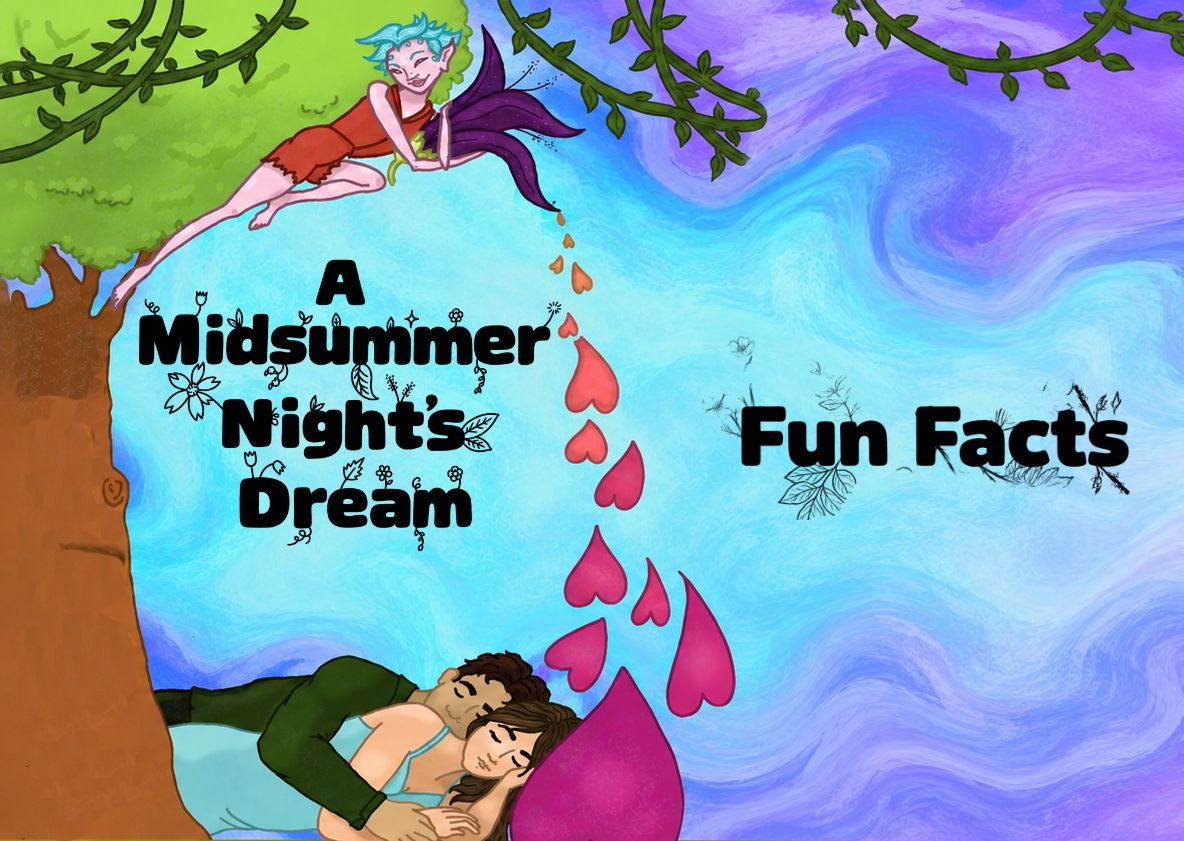
- Nobody knows the exact date it was written. Most scholars believe Shakespeare wrote it around 1595–1596, during one of the most successful periods of his career.
- It's one of Shakespeare's most-performed comedies. Along with plays like Twelfth Night, it remains a favorite because of its romance, comedy, and magical spectacle.
- The play has four separate worlds that collide:
- The Athenian nobles
- The young lovers
- The fairy kingdom
- The "Mechanicals" (a group of amateur actors)
- Puck may be Shakespeare's most famous fairy. Also called Robin Goodfellow, Puck delights in causing harmless chaos before helping set everything right.
- Bottom is transformed into a donkey—but only his head! His friends flee in terror, but the fairy queen Titania, enchanted by a love potion, falls hopelessly in love with him.
- The play-within-a-play steals the show. The Mechanicals perform "Pyramus and Thisbe," an intentionally awful tragedy that audiences have laughed at for over 400 years.
- The forest represents freedom. Characters leave the strict rules of Athens behind and enter a place where dreams, magic, and mistaken identities reign.
- The love potion causes all the confusion. Nearly every romantic mix-up happens because a magical flower makes people fall in love with the first person they see.
- The title refers to the eve of Midsummer. In European folklore, Midsummer Night was believed to be a magical time when fairies and supernatural beings roamed freely.
- The play inspired countless works of art. It has influenced ballets, operas, films, paintings, and music, including the famous wedding music by Felix Mendelssohn, who wrote the beloved Wedding March.
- Queen Victoria loved it. The play enjoyed enormous popularity during the Victorian era, when elaborate fairy productions became theatrical spectacles.
- The ending blurs the line between dreams and reality. Puck suggests that if the audience didn't like the play, they should simply think of it as a dream.
A few lesser-known facts
- The lovers spend only one night in the enchanted forest, but it changes all of their lives.
- Bottom is the only human character who interacts extensively with the fairies—and he barely questions it.
- Puck speaks the final lines of the play, directly addressing the audience, making him one of Shakespeare's most memorable narrators.